


HOME & BUSINESS ELECTRIC
262-278-0330
Call us for quality!
Professional Generator Installation in Waukesha, WI


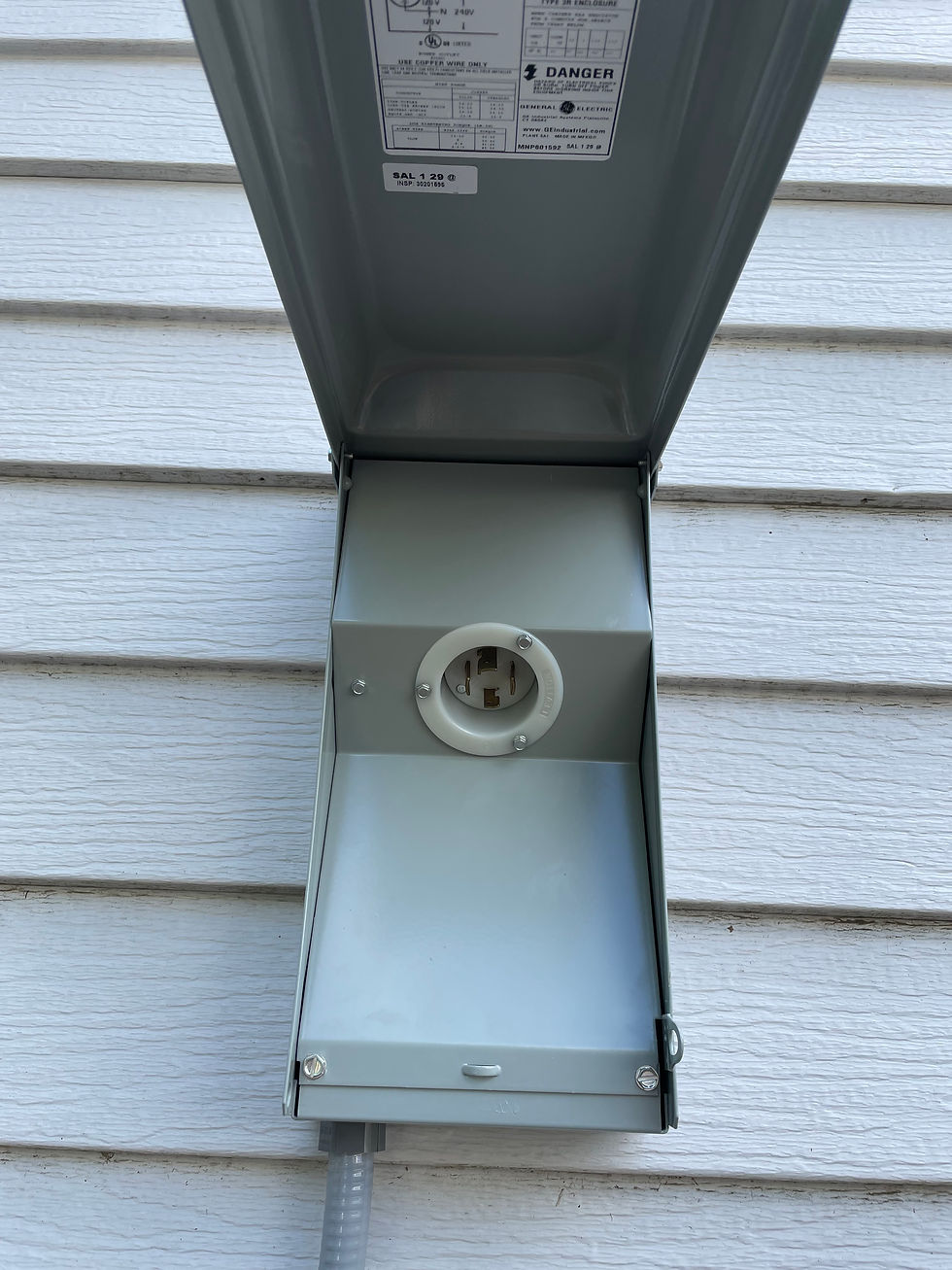
Power outages in southeastern Wisconsin aren’t a matter of if—they’re a matter of when. Between summer storms, heavy snow, ice, and high winds, losing power for hours (or even days) is something many Waukesha County homeowners experience at least once a year. When that happens, having a plan to keep the essentials running can make a stressful situation far more manageable.
One of the most practical and cost-effective solutions we recommend is installing a portable generator inlet with a mechanical interlock. This setup allows you to safely power key circuits in your home during an outage without the expense of a full whole-home generator system.
Standby vs. Portable Generators
There are two primary types of home backup generators, and choosing the right one depends on your budget, power needs, and how often you experience outages in your neighborhood.
Activation: Portable — manual, must be started by hand. Standby — automatic, starts within 10 seconds.
Fuel: Portable — gasoline (must be stored). Standby — natural gas or propane (utility line).
Power Output: Portable — 3,000–12,000 watts. Standby — 7,000–22,000+ watts.
Installation: Portable — minimal (requires transfer switch). Standby — professional electrician required.
Cost: Portable — $500–$3,000. Standby — $3,000–$12,000 installed.
Best For: Portable — occasional short outages. Standby — frequent outages, medical equipment, full home.
Why We Recommend a Portable Generator
Portable generators are a flexible backup power option that can be powered by gasoline, propane, or natural gas. Many newer models are tri-fuel, meaning they can run on one or all three fuel types depending on availability. That flexibility is a big advantage during extended outages or fuel shortages.
Unlike whole-home standby generators, portable generators do not automatically turn on. They need to be started and connected manually. However, they typically cost a fraction of the price of an automatic generator installation while still providing reliable power for essential needs.
While a portable generator may not power every circuit in your electrical panel, it can comfortably run the most important loads, such as:
-
Refrigerator and freezer
-
Sump pump
-
Furnace or boiler
-
Select lighting circuits
-
Wi-Fi, TVs, and small electronics
For most homeowners, that’s more than enough to get through an outage safely and comfortably.
Frequently Asked Questions
Q: How big of a generator do I need?
A: While every home is different, we generally recommend a 7,500-watt generator or larger for most residential applications. This size provides enough capacity to run multiple essential circuits without constantly worrying about overloads.
During installation, we can help you plan which circuits make the most sense to power during an outage, based on your home’s layout and priorities.
Q: Do I need a permit to install a generator in Wisconsin?
A: Yes. Generator installations require a permit. Home and Business Electric handles all permitting as part of our installation service.